Monday, July 24, 2006

She who controls the Spice...

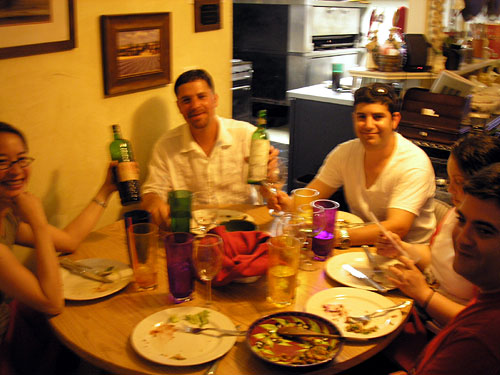
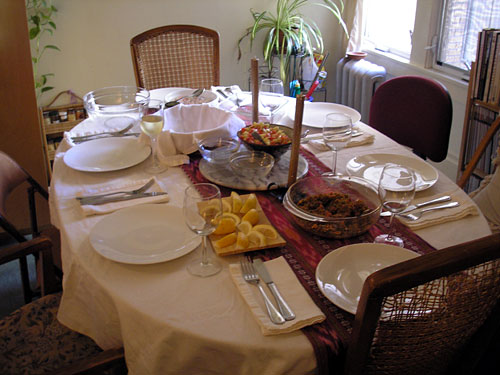
We had a little dinner party last night. In our apartment. We don't entertain in our house very much -- it's a bit of a tight fit. Sure, the table might look nice in this picture, but if I backed up any further to take this picture I'd go through the wall.

Eric and I keep thinking we should do a show for Food Network. "Four Courses in Four Square Feet."
Since it's so HOT we decided that maybe spicy Indian food might be the answer. As usual, I planned a meal for six people that included enough food to feed ten, but now we have lots of great leftovers.

On the menu:

Mango Lassi

Tandoori Game Hens with a Cucumber Raita
Basmati Rice Pilaf with Apricots and Almonds
Chickpea Salad
Saag Paneer
Bengan Bhartha

Chiku Sorbet

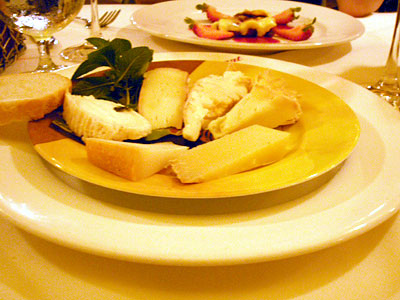
Bucheret from Redwood Hill Farm
Honey & Toasted Walnuts

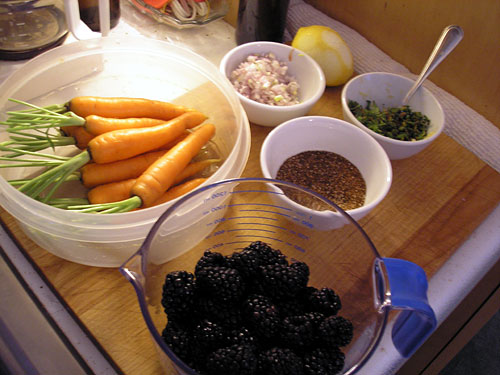
A lot of the dishes we pre-prepped so that we could enjoy chatting when everyone arrived. Very Martha Stewart. In magazines, you always see the hostess jubilantly chatting with guests as she deftly prepares a cassoulet with one hand and uncorks a Syrah with the other. But control freak that I am, I've learned over the years that I have to have the entire mise en place pretty much set up and labelled and ready to go ... or else I'll freak out, swing the 8-inch chef's knife around my head and start blurting out irrelevant responses to my guests. Nowadays, I try to leave myself one picturesque task , like chopping cilantro or slicing lemons. Everything else needs to be plug-and-play.

Eric and I have a system that includes a lot of prep bowls and notes on post-its. It works quite well. And for this dinner I planned shopped and prepped, and Eric cooked. I feel like an executive chef.

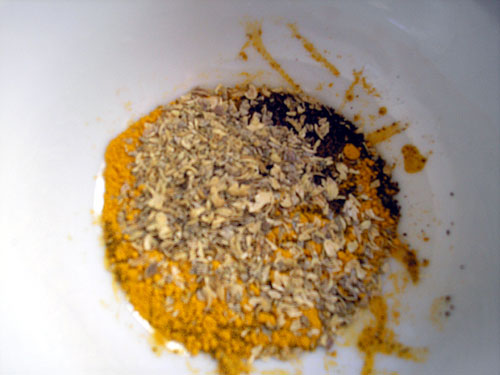
For dishes like curries and such, I have a masala recipe I like a lot. From Cuisine of course. It makes a huge difference to actually toast and grind your own masala, as opposed to using a commercial curry powder.

Every time I make it the house smells great. I feel like I should be stalking around like Muad'Dib, with glowing blue eyes -- "He who controls the Spice controls the universe!"

Try it once, you'll never go back.

Dry Masala

2 Tbsp cumin seeds
1 Tbsp coriander seeds
2 tsp fenugreek seeds
1 tsp fennel seeds
1 tsp cardamom seeds
1 Tbsp. ground turmeric

Place the seeds in a dry saute pan and toast over medium high heat until they're fragrant and brown. Stir often to keep them from burning.

Transfer the whole batch to a clean coffee grinder and process into a powder. Remove from grinder and mix in the turmeric.

The Spice will keep for a month in a jar or tupperware before it starts losing impact. WHen I have a batch of it going I sprinkle it on any recipe that asks for Garam Masala or curry powder.

We put it on the Bengan Bhartha -- an eggplant dish that I felt was a little bland. Actually that was the dish for me that was just a little too much trouble for the amount of product.

I started it early in the morning, so I could roast the eggplants while it was still cool in the house, and I, bleary-eyed, failed to puncture the eggplants before popping them in the oven.

So they exploded.

Eric thought we should change the name to Bangin' Bhartha.

Then I burned my hand with hot oil while saute-ing. (Small aside: Everyone who cooks should go out and buy some Second Skin Moist Burn Pads to keep around the house. You can find it at many drugstores. If you ever burn yourself badly, Just slap one of those on the burn. It's amazing how it helps cool and heal it. In the places where I placed the Second Skin, the skin is fine. On the edge though, just where the stuff missed covering the burn, I have a blister.)

Anyhow so the upshot of the Bhartha episode is that it was tasty, but I'm still working hrough some residual resentment about the dish.

I will mention the Saag Paneer though, a very tasty spinach and yogurt dish that has about a million different versions. It uses an Indian cheese called paneer, which is very much like drained ricotta. You can make it at home, but we also found it at Bombay Bazaar on Valencia, where we picked up cumin, coriander and fenugreek seeds as well as the chiku ice cream.

Here's a variation of Ismail Merchant's Saag Paneer, which is very tasty.

1 1/2 pounds fresh spinach
7 oz chunk of paneer
3-4 Tbsp vegetable oil
6 Tbsp butter
1 onion, peeled and chopped
4 garlic cloves, peeled and crushed
1-inch piece fresh ginger root, peeled and grated
1 tsp ground cumin
1/2 tsp cayenne pepper
1/2 tsp ground black pepper
1 tsp garam masala
1 tsp kosher salt (or to taste)
a pinch of tumeric
1 cup yogurt

Wash the spinach well. Cook it in a large saucepan with 1/2 cup of water for 2-3 minutes. When tender, drain and chop.

Cut the paneer into 1/2-inch cubes. Heat the oil in a large skillet. Fry the cubes of paneer in batches, turning over once or twice, until they are light brown. Remove the paneer with a slotted spoon and drain on paper towels.

In a large skillet, melt the butter with 1 tablespoon of oil over medium heat and cook the onion until it begins to brown. Add the garlic and cook for 2 minutes. Add the ginger and the spices, and stir well. Heat for a few minutes. Transfer the contents of the skillet into a food processer. Add the yogurt and process together until smooth.

Transfer the spinach mixture back to the skillet. Add the paneer, and simmer, covered, for 10 minutes. Serve hot.

Sunday, July 23, 2006

Brescianella, Lingot de Quercy & Fuzzy Butt Pale Ale

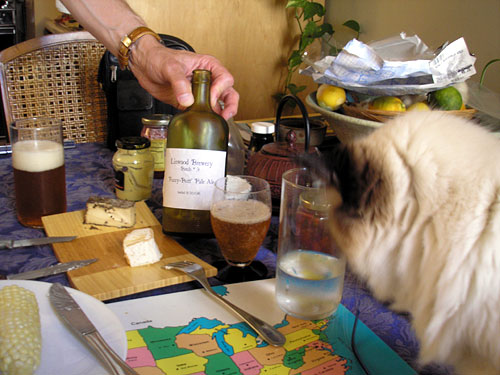
In recent months, Eric has been making excellent use of the home brew equipment, and I 'd be remiss if I didn't mention his latest creation -- made especially for -- well, you might be able guess who it's for. This is the Fuzzy Butt sitting proudly next to his namesake "Fuzzy Butt" Pale Ale. And as you can see, it is indeed fuzzy.

But, what is he looking at, you enquire -- because, strangely, he seems to be looking past the glass of ale....

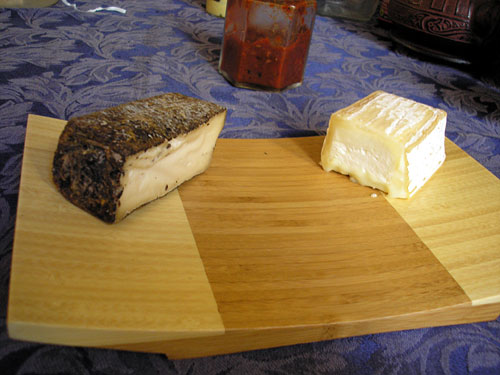
The answer, as it turns out, is a little weekend treat -- for us, not the kitty -- a chunk of Lingot de Quercy, a very tasty, but tangy-on-the-back-end goat cheese from the Rocamadour cooperative -- the fine folks that also bring you Cabecou. Apparently opinion often splits on this cheese, but we found it perky and delightful, as good goat cheese should be. Janet Fletcher had some things to say about it and pasteurization in her column.

The other fascinating concoction pictured on the left is an Italian Brescianella all'Acquavita-- a cheese that's been washed in acquavit and then wrapped up in rye soaked in brandy. Uh... yum. The homeland of this cheese is in Lombardy, and the *pow* of flavors just keep on coming as you eat it. Highly recommended, but not for the faint of heart.

Ah, the sweet stinky smell of cheese. The kitty likes ale, but at heart he is, after all, the Cheese Kitty.

Read more about the making of Fuzzy Butt Pale Ale on Eric's site!

Monday, July 17, 2006

Weekend Cheesing: Evora, Chalosse & Teleme

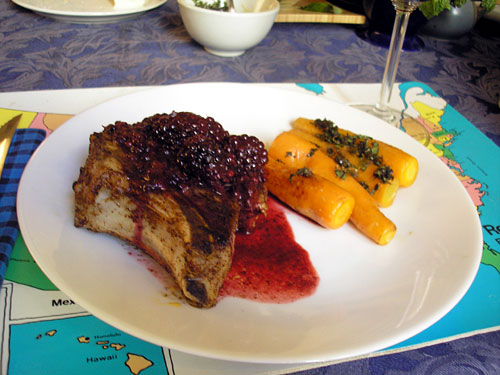
Saturday was a little bit of a lazy day. We had originally wanted to try out a recipe for Pork Chops in Blackberry Zinfandel Sauce -- to go along with one of our fabulous zins from Paso -- but realized that neither of us were willing to cook a pork chop without brining it for a day. It's against our religion at this point.

So although we made a trip to the Farmers Market at the Ferry Plaza and bought all kinds of fun stuff, we had a pretty simple meal of cheese, meat and pate on Saturday night. Didn't bother me. That's one of my favorite sorts of meals, because I'm a born grazer.

So is our Cheese Kitty, who is eyeing some of our pate and the last of the Molinari coppa we bought for picnicking.

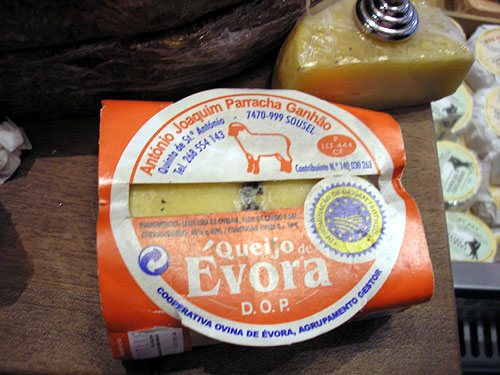
At Cowgirl, we picked up an interesting and quite tangy little Portuguese cheese called Evora, and also some irresistible soft-ripened Tomme de Chalosse, affined by Jean d'Alos.


As a treat, Eric also bought me some Teleme, the Peluso family soft cheese that is just fabulous on a toasted bit of baguette. Here's what Janet Fletcher had to say about it in the SF Chronicle.

Teleme is defintely better when nicely goopy, and at a warm room temperature.

Oh, and the pork chops? Worked out well, but they were QUITE spicy. (A rub on the outside had about a teaspoon of cayenne in it, which aerosolized nicely when the chop hit the pan. *cough, cough, cough*)

I think they looked quite nice, but I wasn't thoroughly happy with the balance of the sauce, so I won't post a recipe until we've made some adjustments.

We had it though with the Turley 2004 Dusi Vineyard Zin which was just lovely -- blackberry and spice. Mmmmm...

Sunday, July 16, 2006

Constant Bliss, and Orange Chipotle Rib dinner

American cheese again. How happy am I to be cheese-obsessed at this point in the history of American cheese? I mean, I grew up thinking Kraft individually wrapped slices were pretty cool. Maybe it was that smooth plastic sheen and the way it held your fingerprints -- well, things weren't about flavor for me back then.

All I can say in my defense is, I didn't know back then what real cheese was like.

Pictured here is a lovely little Jasper Hill Farm soft-ripened round, made from "fresh, right out of the cow, uncooled, evening milk" and appropriately named Constant Bliss. It looks a lot like Chaource, but is, according to Jasper Hill, not like it in flavor at all. I'll have to take their word for it, since I haven't gotten around to sampling Chaource yet...

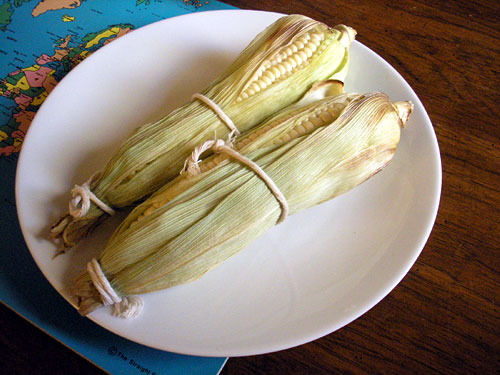
For dinner, we had Orange Chipotle Barbecued Ribs and lime roasted corn. I can't say it was better than the ribs slathered in lime sauce that we made a few weeks ago, but they were spicy good and well worth a try.

Orange Chipotle Spare Ribs

RUB:
2 Tbsp. kosher salt
2 Tbsp. black pepper
1 Tbsp chili powder
1 Tbsp paprika
1 Tbsp. ground oregano
1 Tbsp. dried thyme

Orange Chipotle sauce:
1 cup chopped yellow onion
2 Tbsp vegetable oil
2 Tbsp minced garlic
1 cup ketchup
1 cup orange marmalade
3/4 cup apple cider vinegar
1/2 cup brown sugar
1/4 cup yellow mustard
1/4 cup lime juice
2 whole chipotle peppers
1/4 cup chopped fresh cilantro

2 racks of spare ribs (26 ribs)

To trim ribs (if your butcher hasn't already), trim the "skirt flap" from the sinew side of the ribs. Cut off the breast plate and flexible feather bones that form the rounded part of the ribs. Remove the sinewy sheet of membrane from the back of the ribs by grabbing a corner of it with a paper towel and slowly pulling it away from the bones.

Dock between the bones with a fork (kind of like pricking a potato). Lay the ribs out on a large baking sheet lined with tinfoil (for easy cleanup).

Mix rub ingredients together and rub all over the ribs, top and bottom. Then cover with foil and let them sit for an hour.

Heat the oven to 250°F and slow roast the ribs for 1-1/2 to 2 hours. The meat will pull away from the bones slightly when they're done.

While that's going on, prepare the Orange Chipotle Sauce. Saute the onions in vegetable oil for a few minutes and then add the garlic and saute a few minutes longer. Add the other ingredients for the sauce and let simmer for about 30 minutes. Off the heat, stir in the cilantro.

If you're going to grill, prepare the grill by rubbing it down with a paper towel soaked in oil.
If you're doing it in the oven, preheat the broiler.

When the meat is pulling away from the bone, it's about ready. Take it out of the oven and uncover. Slather it on the top side with sauce and put it on the grill or under the broiler. After five minutes, take it off, flip it over and slather the other side. Then put it back in the heat for another five minutes. Flip over again and slather it one more time on the top side. Cook another few minutes until it's nice and crusty and tasty-looking and you can't stand another minute of waiting...

Friday, July 14, 2006

Our Summer Vacation: Part IV -- Agritourism and Eating Places

Wherever we go, there we eat.

Agritourism is big these days, or so I hear. Of course, I didn't even know it was called that, we're just irresistibly drawn to food-related activities.

When we talked to people about going to Paso, there was a blank look -- the "what will you do there?" kind of look. Well, plenty as it turns out.

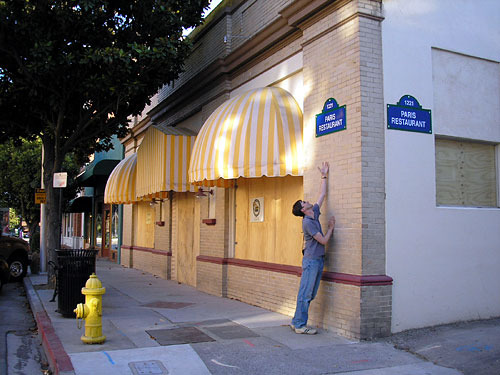
Paso isn't Paris, but it's not quite the sleepy little hamlet you might think. It even has a nice French restaurant. No, not this one -- Restaurant Paris, which we had read about. We discovered they were closed, sadly.

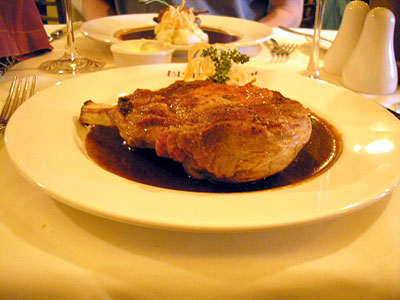
But just around the corner is Bistro Laurent (1202 Pine St., (805) 226-8191), a very cozy French bistro -- a little pricey, but with excellent food, like my quite succulent pork chop.

We arrived on the day that France played Portugal in the semi-finals of the World Cup, and chef Laurent Grangien was quite happy to tell us the results.


And of course, they have a cheese plate. The waitstaff seemed confused when I asked what the cheeses were.

"Well we have many cheeses and the chef chooses some each day."

"That's nice. Which cheeses? French?"

"Ye-es..I think so. Um, let me get you someone who can tell you..."

The maitre d comes over. Repeat of above conversation. I decide to put them out of their misery and just order the cheese plate. When it arrives, he kindly informs me that it's Saint-Maure de Touraine, Comte, Tete de Moine, Pont l'Eveque, Reblochon and Etorki.

"What?" I say, not quite understanding the last cheese name.

"Etorki?" he says a little more slowly.

"Oh, the Basque mountain cheese," I say. As the words come out of my mouth, I'm wondering, Where the heck did that come from? I've never had Etorki in my life. I'm starting to scare myself with this cheese stuff.

(Etorki is quite delish, by the way, although Eric went into rhapsodies over the Tete de Moine. Since seeing one in Milan, I've always wanted a girolle, the thing they use to make beautiful rosettes of Tete de Moine.)

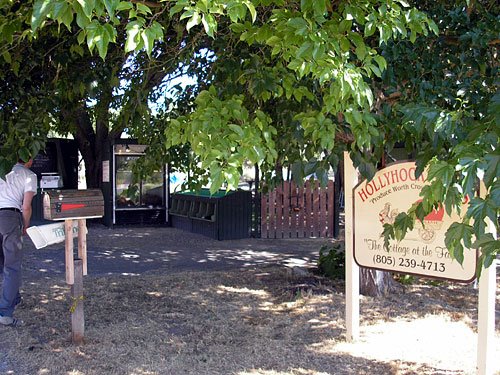
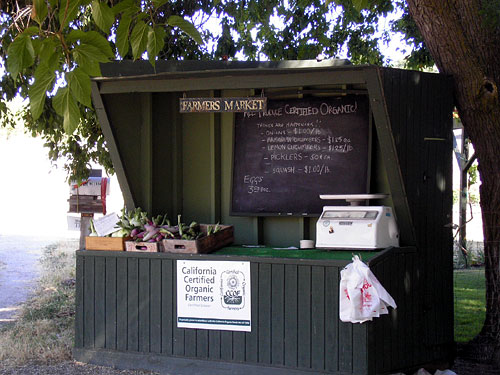
Anyway, onward. I had read about a roadside organic farmstand in Templeton called Hollyhock Farm, where you can get seasonal vegetables and fresh eggs. It's all on the honor system, so consumers are expected to choose their produce and then check the prices, weigh, and slip some cash into the little slot on the stand.

Apparently you can also do a farm stay there, although we didn't roam too far in, feeling a little shy about tromping about on what was clearly someone's front yard.

I was also a little bummed that only cucumbers and onions were in season and the eggs were all gone, but we selected some onions and bagged and duly paid. Honor code was big at my college and I like the idea that someone comes into this relationship already trusted.

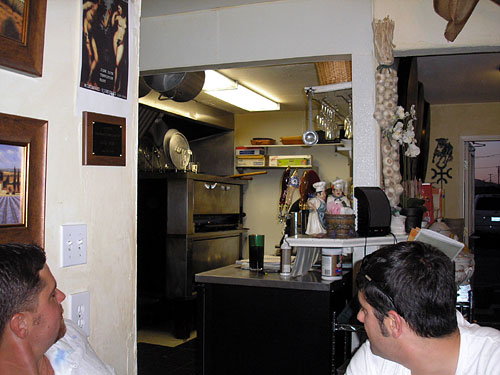
After a dusty day, we retreated to the hotel to take a shower and then drove ten minutes to San Miguel to eat at a crazy place that we'd heard about called the Tenth Street Vineyard Cafe.

The establishment of Dallas and Caren Holt, this is one crazy little farmhouse. You call ahead (definitely call ahead, reservations are essential), and arrive to find yourself in what looks like someone's living room. A prix fixe ($24.95, cash only), nine-course Basque feast is served family style in a raucous atmosphere only encouraged by Dallas, who makes everyone in the place drink sangria from his bota bag (a Basque wine skin). And I mean everyone. I'm not kidding.

Our table was the place to be that evening, as we had three Basque brothers, who brought a Rioja, a bottle of pacharan and a load of great stories. Fermin was celebrating his saint's name day -- and the opening of Pamplona's San Fermines, known to the rest of us as "the running of the bulls."

The pacharan was a big hit with Dallas, who came by for a sample, and then returned for another sample to share with a rowdy bunch of winemakers in the next room.

"Great stuff!" he exclaimed. "What is it made from?"

Pacharan, or patxaran, is a liqueur and according to Wikipedia, it's made by soaking sloe berries (like those used for gin) in anisette with a few coffee beans and a vanilla pod for several months. It's apparently not easy to get a hold of, although up here in the Bay Area, K&L Wine and Liquor carries it. Makes a lovely digestif after the meal, which was enormous.

Everything comes out of this little kitchen. We were so intent on pacing ourselves foodwise, that we literally forgot to take pictures. Except for the one below of the sort of Basque shepherd's pie.

Tapas, soup, migas (a kind of spiced bread crumb dish that Fermin and David informed us is usually a peasant shepherd dish), paella, the food just kept on coming.

By the end of the night, I needed a wheelbarrow to cart me and the nine courses back to the hotel, where I flopped onto the bed in much the same fashion as the elephant seals of Piedras Blancas.

They move kind of like Jabba the Hutt -- *slug, slug, slug* ...uhhhh... too much effort. *flop* Watch the movie. You'll see...

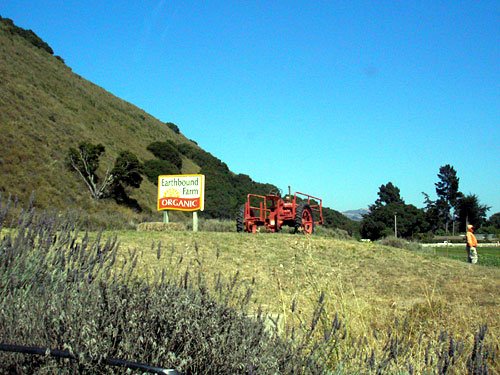
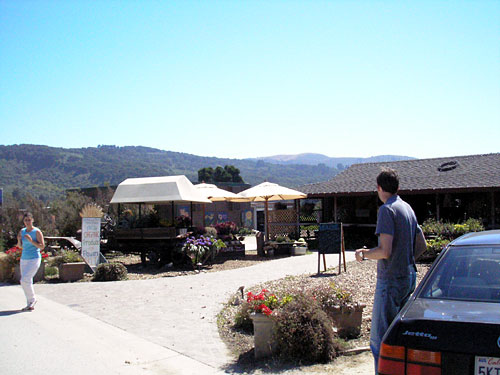
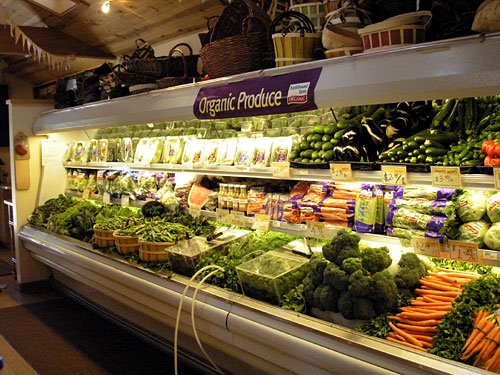
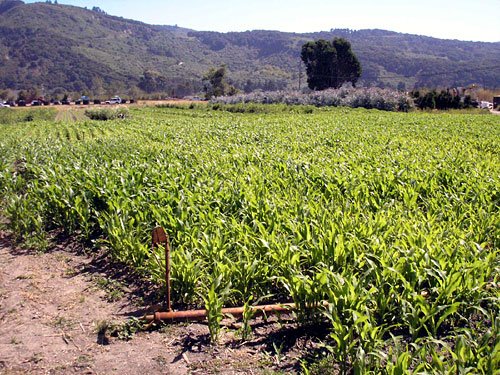
The agritour continued with a stop at the "little charming farmstand" that made Earthbound Farms so famous, just off of Hwy 1 before you get into Pebble Beach.


Earthbound's success as "organic gone big business" has gotten some coverage recently. Steve Shapin's recent New Yorker article "Paradise Sold" really made me think about this whole organic movement and what it means.

On the one hand, people are eating a pesticide-free, healthier vegetable, but on the other hand, this brand of "organic" is grown on vast tracts -- 26,000 acres of land total -- and they truck those nice plastic packages of washed lettuce off to the 50 states. Here, "organic" doesn't follow that one key part of the organic philosophy -- it isn't local. Nor is it cheap. This is exclusive stuff, being sold to only those consumers who can afford that kind of lifestyle.

But I sigh with frustration, because being a conscientious locavore seems insurmountably difficult. Who can I buy from? What can I eat? How much can I eat? Do I care enough about all of this really? Maybe I should just forget all about this stuff and pop down to the corner grocery and get a bag of Cool Ranch Doritos and a six pack of Coke.

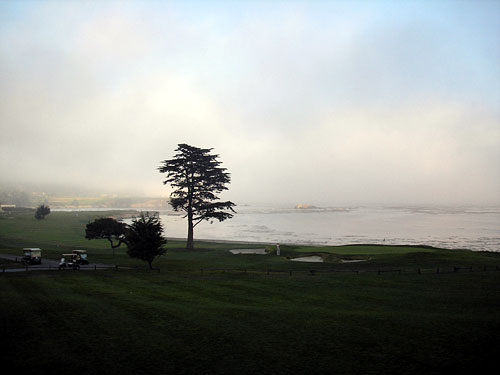
The fog rolls in like a rebuke, and I think, no, no, take advantage of living in the one place in this country where this seems even feasible.

We decide to put Earthbound behind us, having purchased nary an onion. We'll focus instead on an extravagant, but exquisitely prepared meal, designed for the sort of people who play golf in Pebble Beach. Dinner, in fact, was at the Stillwater Bar & Grill, at the Lodge at Pebble Beach. The Lodge. Golf. Different world from ours.

There's guilt of course, but it's delicious guilt. Tuna prepared beautifully with a touch of toasted black sesame seeds and perfectly ripe avocado.


Perfectly seared scallops in a richly, flavorful dark sauce, with a potato puree and mache.

Not the same as the Basque feast, but we were thrilled with every bite as we watched the sun set through a mist of fog over the cove.

Yeah, this kind of life is good.

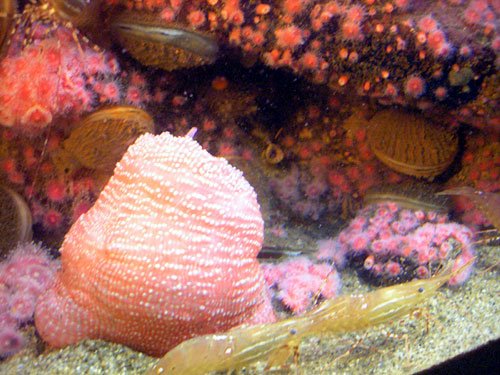
Of course, we can't leave Monterey without paying a visit to the amazing Monterey Bay Aquarium. I'm constantly flabbergasted at the amazing, strange, alien things that come from the sea.


Are those really scallops lurking under that rock? Scallops like the ones we eat?

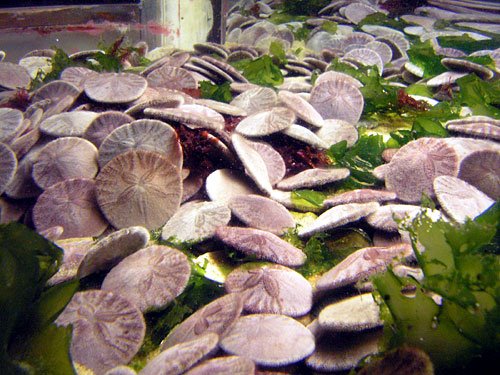
And live sand dollars. I love looking at the velvety sand dollars, which are vastly more interesting than the dead skeletons you find of this beast at the beach.

We also spend about twnety minutes standing at the OUter Bay tank, mesmerized by the ocean sunfish.

"Do you think he can see us?"

"Oh yeah. Look at him... he's playing us... 'Hey, tuna! C'mere! Look at the weird monkey creatures. No, really, look! They'll stand there all day filming us...'"

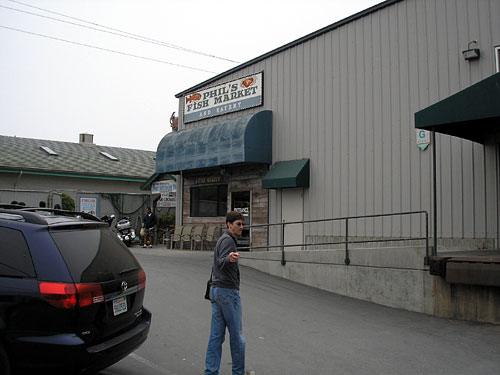
After all the abundance, we decided to stop at Phil's Fish Market in Moss Landing. It was a little bit tricky to find and seemed buried among the many sea-related institutions of the area.

Unfortunately, it was not the stinky fish market of my dreams -- I continue to search for the kind of place I remember as a child when my Dad took me through the old Fulton Fish Market. (I'm a New Yorker. We loathe change in our city, so the closure of the Fulton Fish Market is a crime, spoken of in the same terms as we refer to the demolition of the Old Met and the destruction of the old Penn Station.)

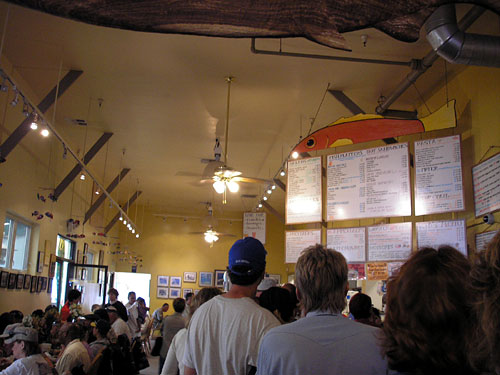
But I digress. Phil's. Atmospheric. Not as hopelessly crowded as Cannery Row, but not less touristy or less pricey. Eric ordered some blackened scallops and I got the fried artichoke hearts. Decent, but not much to write home about.


Curiously though, Phil's got a lot of press the week after we were there, with appearances on "The View," and "Road Tasted."

Go figure.

Sunday, July 09, 2006

Our Summer Vacation: Part III -- Cute Animal Segment

As a city slicker, I have that constant fascination with farm animals that makes my agrarian friends hoot with laughter.

"No, you don't want to raise goats," they inform me, "Or chickens or cows or any of those things."

"How about sea otters?" I enquire.

During this whole trip Eric was, I think, faintly amused at my obsession with taking pictures of animals.

"Look, look! Chickens scratching in the dirt!" I'd shout as I dashed forward with camera in hand.

"Yes, that's what real chickens do," he replies.

I snap a few pictures of happy chickens being happy chickens and then am overcome at the mental picture of all those sad birds trapped inside a hen house with a tiny door at one end so that they can be called "free range." I recently learned the term "pastured poultry" meaning chickens that are raised roaming over grass and scratching for insects. If you want to find out where they raise pastured poultry near you, check the American Pastured Poultry Producers Association site.

Many of my friends have expressed the desire for their lives to play out this way:

"I'd quit my job and have a farm up north someplace and raise goats..."

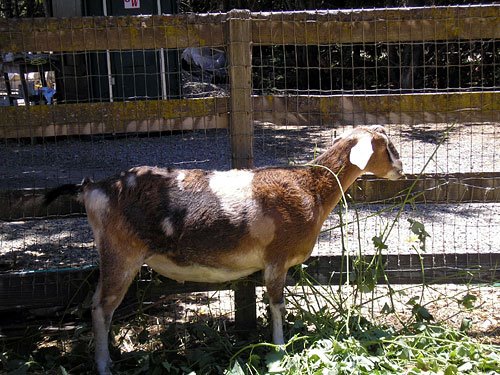
For all of them, I include this happy goat picture from Sycamore Herb Farms (Highway 46, 3 miles west of US 101. Open 10:30 to 5:30 daily; (800) 576-5288.)

The day of our trip to Hearst castle, we decided to drive a few miles north to Piedras Blancas to visit the elephant seals.

Elephant seals are too much fun. In this part of the season, the juvenile males are molting still. Here they're lined up at the edge of the water like anchovies in a can.

These aren't the big alpha males, we're told, although these boys look like they outweigh me by about 700 pounds. Every so often they get into little tiffs with each other, and then flop back down on the sand -- probably because it's too much effort to keep that up for long...

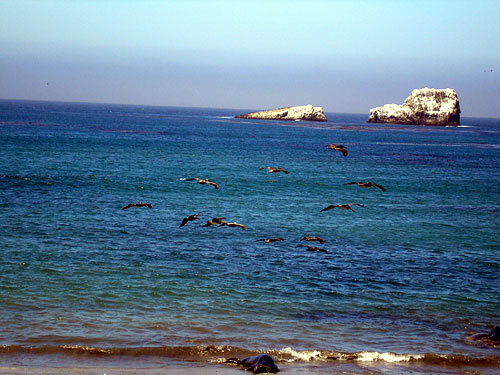
A clutch of pelicans sailed low over the beach and made for a picturesque moment.


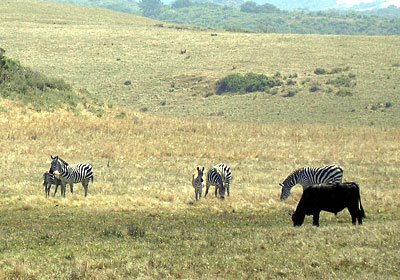
Across the highway Mr. Hearst's zebras still roam the pastures as if they think they're cows. The zoo they came from is long gone, but they seem happy enough. Maybe it's the views.


We stayed over a night in Monterey, and of course, a visit to the Aquarium is de rigeur.

Eric had never seen them feed the fish in the big tank before, and afterwards, we scampered up to the third floor to watch the diver come up, flippers and all.

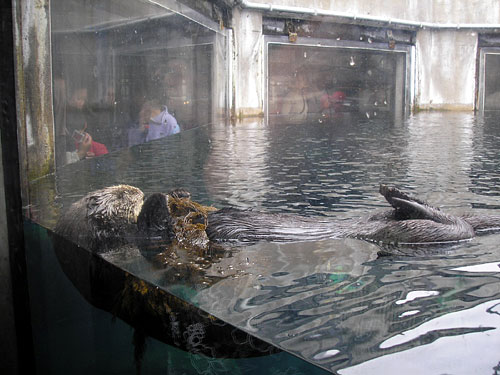
Over at the otter tank, it was naptime. Here, one of the otters slumbers peacefully with some seaweed clutched like a safety blanket in her adorable paws.

I love cute paws.

Our Summer Vacation: Part II - Zinfandel Mania

One of the reasons we went on this little jaunt of course, was so that my zin-obsessed husband could wrap his palate around the robust little wines that are making a name for Paso Robles.

A few months ago, his sister brought us back some phenomenal wine from a place called Zin Alley (more about them later) and so we thought, why not check out what all this Paso talk is about, anyhow?

Neither one of us has ever been to Paso actually. I've passed through of course, as most people have -- you know, as you drive at 100 miles an hour between LA and SF, trying to get home before nightfall.

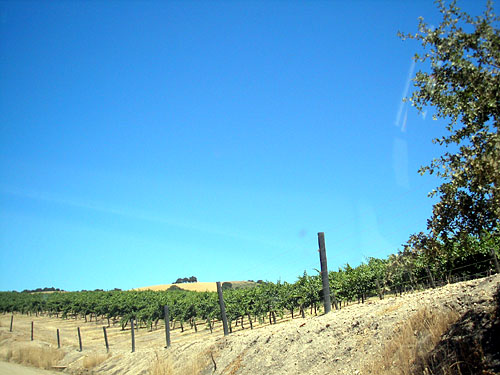
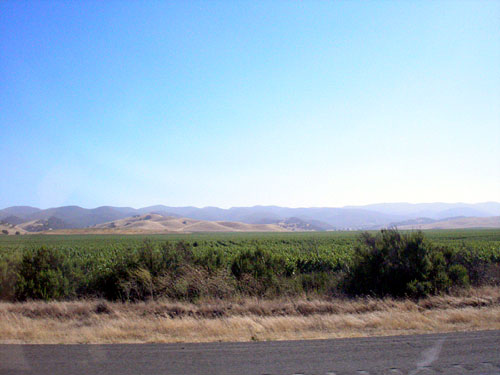
On the way though, we couldn't help noticing the HUMONGOUS vineyard visible, well, pretty much everywhere on the drive between King City and San Miguel. Covering some 12,600 acres, this giant parcel runs south of the Salinas River. It's the largest contiguous vineyard in the world and it's owned by the Indelicato family, who makes Delicato Wines. Here's an article with more on the vineyard.

It seemed, there was a lot unexpected about the region and we had a lot to learn about the wine-makers of the Paso region. We decided to concentrate on the part of the region west of Highway 101. It seems you can drive along Vineyard Drive and hit a winery every ten seconds these days, although in the not so distant past, we were told, only twelve wineries really held sway in Paso. I'll leave the serious discussion of the wine to my better half, who has the palate of the family. But I'll mention the places we visited -- and there were some fun ones!

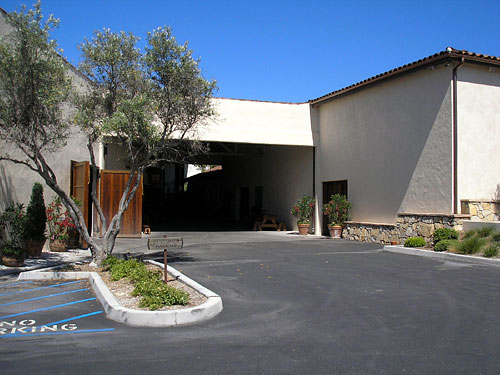
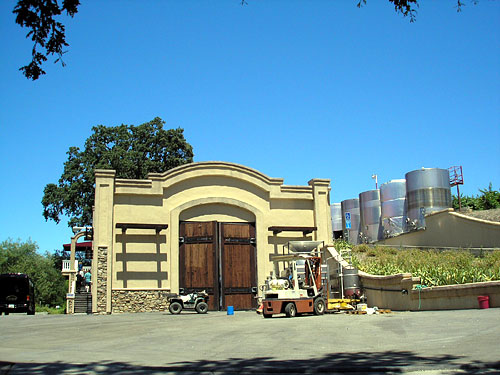
Our first stop was at Turley Wine Cellars. We'd read about the 80-year old vines that were part of the old Pesenti vineyard, which Turley acquired in 2000, but that was about all we knew. For a first stop it was not a bad choice, and we found the staff in the tasting room helpful. I was a little dubious though, about the obvious corporatization that's moving into an area that I'd hoped was a little less "Napa." Of course, Turley started out further north near St. Helena, and they've been making wine all over California is what I read, and the experience shows in the wine, which was very polished.

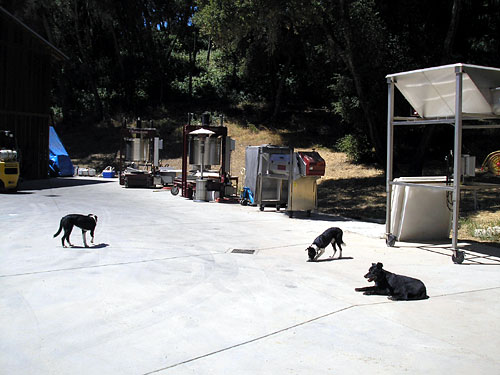
Even though we had our own short list, we asked at Turley which other wineries she would recommend. One that sounded interesting was Linne Calodo, which Matt and Maureen Trevisan started back in 1998. After a little bit of back and forth, we drove through an unmarked gate at the intersection of Highway 46 and Vineyard Drive, and as we came up the dirt road, we were immediately surrounded and, well, herded, by the winery's three border collies, Bear, Blue and Marley.

It was a Thursday, and we didn't realize we were barging in on a day when the winery's tasting room wasn't actually open. But they very kindly let us invade, with our furry escort leading us on. The Trevisans make a fantastic Rhone-style blend called "Sticks and Stones" that is definitely a wine to keep an eye out for. This small producer makes only about 800 cases a year, and it's well worth seeking them out. We bought a couple of bottles, and chatted for a bit about where we were planning to visit that day.

"You sound like you're going to a lot of places, would you like a box so your wines aren't rolling around in the trunk?"

Despite its growing popularity, Paso is, as it turns out, a bit different from the more corporate wine regions, we decided. People are warm, and the relationship between the places seems less viciously competitive. They'll send you to the guy across town, chat for a while, offer advice on food. It reminded me of when I first came to California and visited a -- then -- unknown place called Ravenswood, where the tasting room was a fold-up table in the fermenting room next to giant vats of pungent wild looking stuff. Ravenswod is still nice, but let me tell you, the tasting room looks a bit different now.

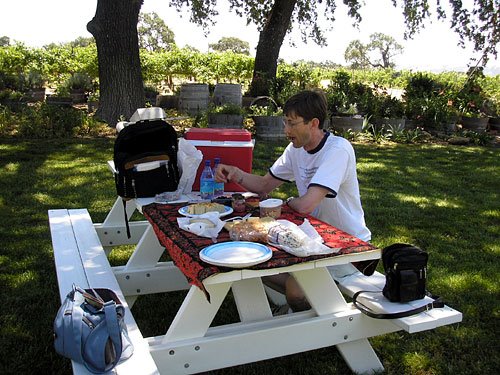
But I digress. We had a nice picnic lunch at Peachy Canyon (more about picnics here) which made a nice respite from the heat and dust. The Peachy Canyon label you can find locally, and we were pleasantly surprised bytheir Cab Franc which had a lot of peppery flavor.

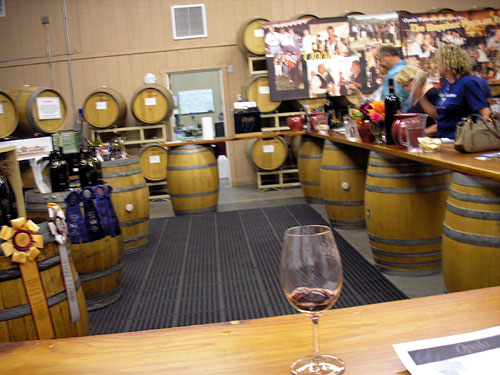
From there, we hove to Opolo Vineyards, where we ran into one of those group limo tours. Did I say the place was becoming more popular? Eric restrained himself manfully and didn't purchase any wine here (no reflection on the quality of Opolo's estate-produced wines), but moved us on a few hundred yards to our next stop along Vineyard Drive.


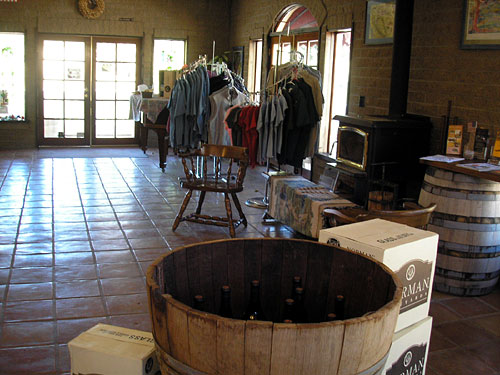
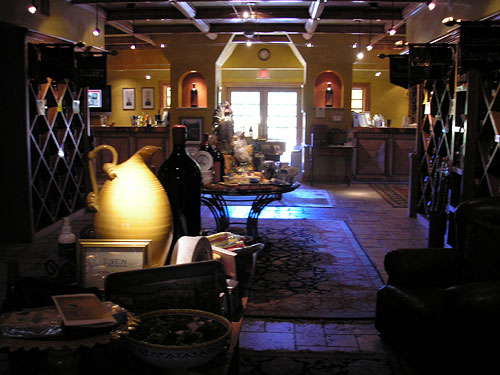
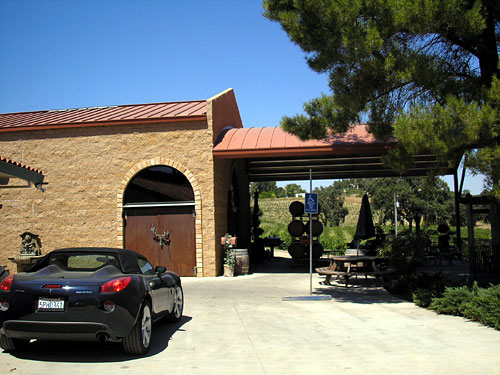
"Monster" Zinfandel was the attraction of our next target, Norman Vineyards, which I immediately appreciated for their wildcat logo. Established in 1971, Norman is one of the older wineries in Paso, and certainly a friendly stop.

Jo, our host in the tasting room poured us two irresistible little gems: a lovely 2003 Syrah and a Mephistopheles Zin that Eric kept smacking his lips over.

Let the meal planning begin.

At this point, I was sensing that we were reaching a limit, budgetarily as well as palate-wise, so we hit only one more place that day -- Justin Vineyards, which I expected to be a bit of a touristy spot. Their Isoceles wine we'd read good things about, but the place has an "auberge" and restaurant, and a shop. Exactly the sort of place that would have made Paul Giamatti cranky in "Sideways."

Nevertheless, we did enjoy the wines, which you can find in lots of places around the Bay Area, including Cost Plus, the Jug Shop and the Ferry Building's Wine Merchant. Some may recognize their name from the disastrous fire at Wines Central in Vallejo last year -- They lost 17,000 cases of wine. (The maker of our favorite California blends Orion and Pleiades, Sean Thackrey took a massive hit in that same fire."
Well after Justin we were tuckered. Literally drained by the sun. We're from Fogtown San Francisco, so we don't really know what that big bright thing in the sky is. We went back to the hotel and collapsed for an afternoon siesta, which is a tradition I think is cerainly worth importing here.
Well, the next day, we went on non-wine adventures to Hearst Castle, and to see Elephant seals. (more on that in another post) but there were two places that had been closed on Thursday and that we couldn't possibly miss.

One was Zin Alley, already mentioned above. The place is a small producer run by Frank and Connie Nerelli. Frank's family, as it turns out, owned the Pesenti Vineyard, the same one which got sold to Turley. But winemaking is in the blood and after making wines for Pesenti and Turley, he acquired his current piece of land, which he dry-farms ("Let the vines do the work" is his motto) and from which he gets one of the most terrific zins we've ever tasted.

Frank's a character -- while we were there, he chatted about the area and noted that he wasn't on any wine maps.

"Oh, you won't find me on any of those," he says waving a hand dismissively. "I had us taken off of all of those. I think there's still one that we're on -- they wanted to do a map of every winery in the area. Can't do anything about that. But I'm off all the other ones."

So you won't see Frank's Zin in Safeway any time soon, and he doesn't have a wine club ("Nah!") but he's willing to mail you wine ("Sure, give me a call. Mail you anything you like!")

He also makes a superb port and a fabulous dessert wine called "After Hours."

Our final stop on the wine adventure was the appropriately-named L'Aventure, the winery of French-born winemaker Stephan Asseo. You can read all about him on their site, and how he found this region when he was looking for a place that duplicated conditions in his native Bordeaux, where he began making wines. Stephan wanted to experiment with his wine, which is um.. not encouraged in Bordeaux -- so he came to Paso where he'd have license to mix his Cabernet Sauvignon with Syrah if he liked. Which he did like. And we like too. It's called his Optimus, if you're interested and it's terrific, as is his 100% Syrah.

"Drink now, and for the next few years," they say.


"Put it in this glass," says Eric.